Kia ora, my name is Frankie Rautahi Tosh, and this post is part of my Term One science assessment. I will explain and reflect on what I have learned during this unit. I will also share my aim, methods, and results.
The first unit I will be sharing today is “Experiencing Particles.”
What are particles? Everything around us is made of particles. Solids, liquids, and gases are all made of very small particles. They are too small to see, even with a normal microscope. These particles are always moving; they move a little in solids, more in liquids, and very fast and freely in gases. There are small gaps between particles, especially in liquids and gases.
Here is the link to my Experiencing Particles Document
My aim in this experiment was to support the idea that someone might not be able to cry. But as the onion’s acid moved its way through the common air particles to my classmate’s eyes, it was too late to say he would not cry. It made his eyes water. So, in other words, the aim did not work. But in a good way, it had proved that the onion was strong enough to make someone tear up. The method we had used was just to dice the onion up on a chopping board and use that to test if the onion’s smell was strong enough. The results were that my classmate did indeed tear up, which was quite funny to see. So far, the experiment has gone quite well, and I have enjoyed it. I give this experiment 8.5/10.
The equipment we used for this experiment was
- Chopping board
- Onions
- Knife

The second unit I will be sharing today is my “Conduction Experiment/Dropping Pins.”
What is conduction? Conduction is one way heat can move from one place to another. It is a heat transfer by direct contact. Heat moves from the hotter object/part to the colder one when they touch. Particles are also involved. In a solid, particles are very close together. When part of the solid is heated, those particles move/vibrate more and pass their energy to the particles next to them, like a chain reaction. Eg, if you put a metal spoon in a hot pot of soup, the end of the spoon gets hot first. Over time, the heat travels up the spoon to the handle. That is called Conduction.
Here is the link to my Conduction Experience Document
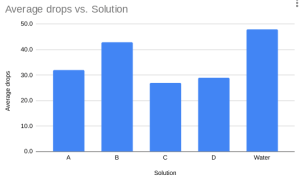
My aim in this experience was for all the pins to drop at once. But of course, that was not going to happen as conduction needs to happen. Where the heat needed to move up the metal rod to cause the vaseline to melt. Meaning the pins would drop instantly. My other aim was also to get them all dropped by two minutes, and that didn’t happen. The method we used was to use vaseline and put it in two different spots on the metal rod. Then we had stuck the pins onto this metal rod. We then used a retort stand and clamp and lit our Bunsen burners up underneath. Then slowly, as the Bunsen burner heated up, the metal rod. Causing the pins to drop. I had enjoyed this experience quite well, maybe one of my favourites, but I am not sure. I give this experiment a 10/10, super fun, and I actually enjoyed it.
The equipment we used for this experiment was
- A metal rod
- Retort stand and clamp
- Bunsen burner
- Vaseline
- 1-4 drawing pins
- A stopwatch

The third unit I will be sharing today is my “Bunsen Burner Experiment.”
What is a Bunsen burner? It is a small gas burner used in laboratories, which mixes gas and air to make a hot, controlled flame. It is used to heat substances, sterilise equipment, or carry out experiments. Its key features are the gas inlet, where the gas comes in from the gas tap. Barrel the long tube where gas mixes with air. Airhole/air vent: You can open or close this to change how much air mixes with the gas. Also, the base, which is the bottom part that keeps it stable on the bench, basically holds it upright.
Here is the link to my Bunsen Burner Experiment Spreadsheet
The aim of this experiment was to successfully do the experiment the right way, which I succeeded in doing. This was a very easy task, only using a tripod, Bunsen burner, gauze mat, matches, beaker, ice cubes, retort stand and clamp, and a thermometer. The method was that we had prepped the Bunsen burner, gauze mat, and got that set up, meaning we were ready to set up the rest. We then set up the retort stand beside it, measuring a good height for the thermometer to reach inside the beaker. We had then put the tripod up for good this time, along with the beaker. Then we put six ice cubes into the beaker. Then we had put a timer on and took the temperature every minute, which is shown in the spreadsheet, along with the temperature. I thought that this experiment in particular was very easy. Fast to finish and easy to get ready for. I did indeed enjoy this one, along with the “Conduction Experiment”. Easy 10/10
*Spreadsheet and presentation didn’t show the equipment*
The fourth unit I will be sharing today is my “Diffusion Experiment.”
What is Diffusion? Diffusion is the spreading out of particles from an area where there are lots of them (high concentration) to an area where there are fewer (low concentration) until they are more evenly spread. It happens because particles are always moving. It does not need stirring, mixing, or a pump; it happens by itself. It can happen in gases (like smells spreading out through the air) and liquids (like food colouring spreading in water). Examples of diffusion that can happen every day. Like smelling perfume or deodorant from across the room. The onion smell is spreading through the classroom air. Food colouring is slowly spreading through a beaker of water without stirring.
Here is the link to my Diffusion Experiment Document
*In this document shown the word potassium permanganate would have been used. We did not end up using potassium permanganate crystals; we used gelation crystals*
My aim for this experiment was that the whole of the gelation crystals would disappear, leaving only colour. But it did also work with the colour diffusing outwards. I was quite happy with the results of the experiment. Though some of the crystals/powder were still shown in the petri dish. Though I do think this experiment would go a lot better if we had used a beaker to measure the water for both temperatures, and measured the gelation we put in. As I kept an eye on the water closely, I did see that some leftover powder was still on the bottom. The rest of the colour had spread around. There was a difference between cold and hot water. The gelation used in the hot water diffused faster than in the cold water. It took longer for the gelation to completely diffuse in the cold water. Overall, this was another fun experiment. I give this one a 7.5/10 because I do think it could have gone better. But there is nothing wrong with it. It still remained fun to do. And enjoyable.
The equipment we used in this experiment was
- Petri dish
- Water
- Tweezers
- A crystal from a gelatin package

The fifth unit I will be sharing today is my “Contraction Experiment.”
What is Contraction? Contraction means getting smaller in volume when particles lose heat. Especially when something cools down, its particles lose energy. They slow down. They move closer together. So the material takes up less space. Eg, a metal ball or ring gets slightly smaller when it is cooled. Or air in a balloon shrinks when you put it in the freezer, the balloon will look smaller because the air particles have less energy and are closer together.
Here is the link to my Contraction Experiment Document
My aim was that I would be able to heat the can up enough so that I would be able to crush the can when it’s placed in the cold water. Because this experiment was quite difficult, it was also very scary. I got quite scared, which caused me to plunge it in cold water at the wrong time. Which means that I wasn’t able to make the can crush by itself. How this happens is because there are no air particles left in the can, hitting each other. As the flame heats the can, a little bit of water starts steaming, which means it is evaporating. But anyway, I still thought it was fun, and I also liked the experience.
The equipment we used for this experiment was
- Aluminium can
- Scissor tongs
- Bunsen Burner
- Heatproof mat
- Tripod
- Gauze mat
- An open container of cold water

- (Unfinished & Not Done Experiments)
-Convection Experiment Document
Although we did a lot of experiments throughout this term, I favour them all as I didn’t really have a favorite out of these 3-5 experiments. All of them were good and fun. I enjoyed them loads, along with the frustration of these subjects. There were a lot of obstacles that stood in the way of this assessment, but it was fun while it lasted.
States of matter! (for more information on states on matter, comment down below)

Thank you for reading my term one Science Assessment – Effects Of Heat. I hope you enjoyed and learned something new from these write-ups. Hope to see you back soon.